Posts

THE CHOICE.

Image
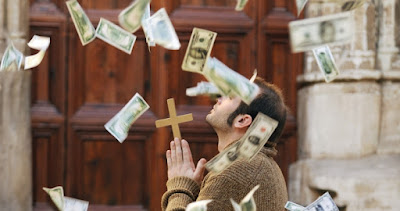
October 10, 2021 Twenty-eighth Sunday in Ordinary Time – B. READINGS: Wis 7:7-11; Ps 90:12-13, 14-15, 16-17; Heb 4:12-13;Mk 10:17-30. An Ivorian proverb says: “He who has the choice has the pain.” And a Bantu proverb adds: “When a lion cannot find the flesh to feed on, it has no choice but to eat the grass.” Life is a choice. Here is a beautiful reality we should all agree with. To live is to make the decision to let go of something for another. Unless one is able to choose, his whole existence is a succession of unhappiness and unfulfillment. He always feels that something is lacking. That he has something more to do to reach his goal. In this process of choice, a man goes from mistakes to mistakes. He thinks he can supply what he is missing with material possessions and riches. But in truth, we all thirst for something greater than material. We thirst for God, and God alone. The way to gain what one needs the more is to let go of the ephemeral and passing possessions and real...

MARRIAGE AND FAMILY FROM THE ORIGIN TO OUR DAYS.

Image
October 3, 2021 Twenty-seventh Sunday in Ordinary Time – B. READINGS: Gn 2:18-24; Ps 128:1-2, 3, 4-5, 6; Heb 2:9-11; Mk10:2-16 or 10:2-12. A Romanian proverb says: “Love is blind, but marriage finds a cure.” And a Filipino proverb adds: “Marriage is not just a porridge that you spit out if it's too hot.” All things are established within God's will. All that exists, exists because of his divine plan and there is nothing that can resist his will. Even marriage and family life find their origin in that will of God. In his project, the Lord established marriage as something very sacred. “The love of the spouses requires, of its very nature, the unity and indissolubility of the spouses' community of persons, which embraces their entire life: "so they are no longer two, but one flesh." They "are called to grow continually in their communion through day-to-day fidelity to their marriage promise of total mutual self-giving." This human communion is co...

ON THE DANGER OF FANATICISM.

Image
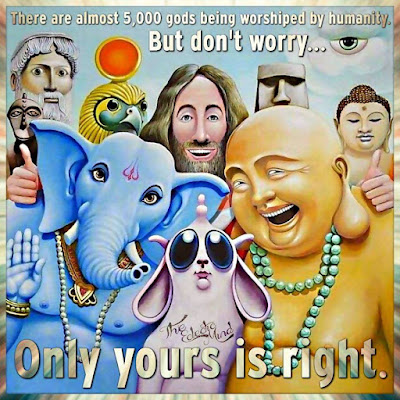
September 26, 2021 Twenty-sixth Sunday in Ordinary Time – B. READINGS: Nm 11:25-29; Ps 19:8, 10, 12-13, 14; Jas 5:1-6; Mk9:38-43, 45, 47-48. An Albanian proverb says: “If a man is right, he cannot be too radical; if wrong, he cannot be too conservative.” And a French proverb adds: “Too much zeal spoils everything.” In religious as well as in social or political life, some people think detaining the whole truth. They think to have an exclusive right on everything. These one run the danger of fanaticism. I tried to look for a quite fitting definition to fanaticism, and here is what I found: "Fanaticism (from the Latin adverb fānāticē [fānāticus; enthusiastic, ecstatic; raging, fanatical, furious]) is a belief or behavior involving uncritical zeal or an obsessive enthusiasm. The philosopher George Santayana defines fanaticism as "redoubling your effort when you have forgotten your aim". Every religious belief has its fanatic members, and some of them easily fall i...

HUMILITY, THE WAY OF GOD.

Image
September 19, 2021 Twenty-fifth Sunday in Ordinary Time – B. READINGS: Wis 2:12, 17-20; Ps 54:3-4, 5, 6 and 8; Jas3:16—4:3; Mk 9:30-37. “If anyone wishes to be first, he shall be the last of all and the servant of all.” (Mk 9:35) A Sicilian proverb says: “Asparagus and mushrooms teach a cook humility.” And an Indian proverb adds: “Austerity is an ornament, humility is honorable.” The Church of the poor is a community that welcomes and embraces the least fortunate, the forsaken, the marginalized, the poorest of the poor. Someone said the Church of Pope Francis is the Church of the poor. I will go further by saying the Church of Jesus Christ is the Church of the poor. The Church of God is the Church of the poor. Because God has a preferential option for the poor and the humble. These assertions are not beatification of poverty but an emphasis on how the humble people are more opened to God and the Gospel, and so, closer to him. Real poverty is not as so much on material possessio...

ECCE LIGNUM CRUCIS (Behold the Wood of the Cross).

Image
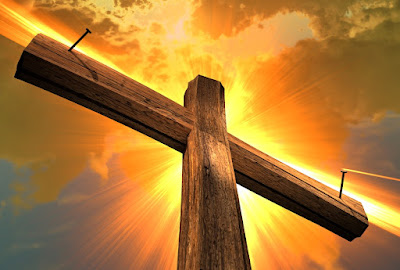
September 14, 2021 Feast of the Exaltation of the Holy Cross. READINGS: Nm 21:4b-9; Ps 78:1bc-2, 34-35, 36-37, 38; Phil2:6-11; Jn 3:13-17. “And just as Moses lifted up the serpent in the desert, so must the Son of Man be lifted up, so that everyone who believes in him may have eternal life.” (Jn 3:14) An Italian proverb says: “Self-exaltation is the fool’s paradise.” And a Filipino proverb adds: “There’s no glory without sacrifice.” There is no glory without suffering. That is the beautiful message of the Feast of the Exaltation of the Cross. Jesus was raised into glory after being raised high on the cross. The instrument of his suffering became the highway to his exaltation at the right hand of the Father in Heaven. Many people find suffering unacceptable and the crosses in life, unbearable. The Lord, today, tells us that we should not be afraid to suffer, and most especially to suffer for righteousness’ sake. For, all our hardships will be rewarded and our lives crowned with ...

NON-VIOLENCE AND FAITH.

Image
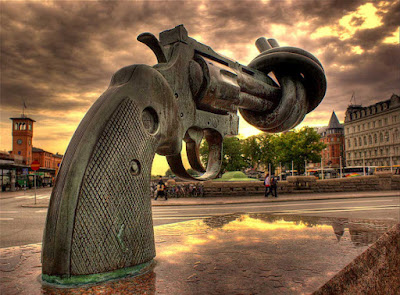
September 12, 2021 Twenty-fourth Sunday in Ordinary Time - B. READINGS: Is 50:5-9a; Ps 116:1-2, 3-4, 5-6, 8-9; Jas 2:14-18;Mk 8:27-35. An Indian proverb says: “Nonviolence is the supreme law of life.” And a Turkish proverb adds: “When violence comes into the house, law and justice leave through the chimney.” When we hear "Non-violence", everyone's mind goes on Martin Luther King, the Black American activist pastor, or Mahatma Gandhi the Indian activist. Non-violence, from the philosophy of these two, but also from that of many other pacific activists, consists in not opposing violent resistance to one who does battle with you with it and to oppression. An article from Stanford University related to this topic says, "King’s notion of nonviolence had six key principles. First, one can resist evil without resorting to violence. Second, nonviolence seeks to win the “friendship and understanding” of the opponent, not to humiliate him (King, Stride, 84). Third, e...

MARY THE PREDESTINED.

Image
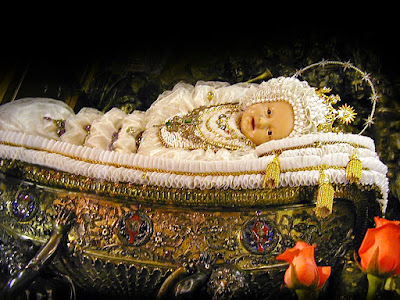
September 8, 2021 Feast of the Nativity of the Blessed Virgin Mary. READINGS: Mi 5:1-4a or Rom 8:28-30; Ps 13:6ab, 6c; Mt 1:1-16, 18-23 or 1:18-23. “Those he foreknew he also predestined to be conformed to the image of his Son…” (Rom 8:29) A Congolese proverb says: “The day the monkey is destined to die, all the trees get slippery.” And a Corsican proverb adds: “At birth, your fate is written.” Great joy in the household of Joachim and Anne. A daughter is born who will give birth to the Savior of the world. With delight we rejoice in the Lord for he has given us the Mother of His Son. God in his great and mysterious love foreknew how he will work out human salvation. So, he forechose Mary to be part of his project. She was chosen by the Father. She was chosen for the Son. She was chosen by the Spirit to be the Blessed Mother of the Savior. In the liturgical calendar, only three people have their birth celebrated, and these three are united to a unique plan, the mystery of s...